DS 300 Data Mining
Course Info
This project-based hands-on course covers various data processing techniques in the data mining pipeline.
Instructor:
Dr. Peilong Li
Office:
Esbenshade 284B
Appointments:
By email
Number of Credits
4
Pre-requisites
- DS 200 Introduction to Data science
- CS 309 Database Systems
Textbooks
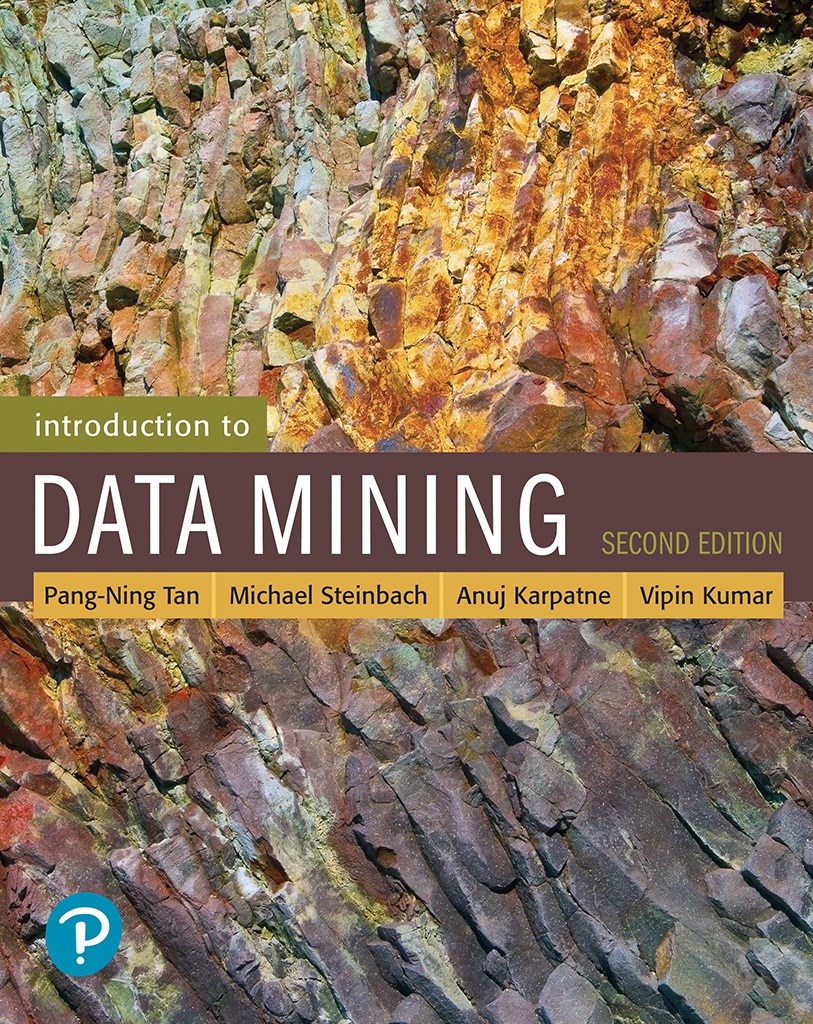
- (Required) Pang-Ning Tan et al.
Introduction to Data Mining (Second Edition) (IDM).
2019, Pearson
ISBN: 9780133128901
Course Overview
Course Coverage
This project-based hands-on course covers various data processing techniques in the data mining pipeline such as 1) data extraction from large data warehouses, 2) data preprocessing to obtain data features, 3) data modeling and data training, and 4) knowledge generation. A number of well-defined data mining tasks such as classification, prediction, association, clustering, dimensionality reduction and deep learning are thoroughly discussed. Design and implementation issues for the aforementioned tasks are also addressed.
Student Learning Outcomes
By the end of the course, the successful students will be able to:
- (Scope) Understand the background and application scope of data mining.
- (Data) Extract raw data from SQL databases using data science toolkit.
- (Hacking) Proficiently use the Python data science toolset including Jupyter notebook, NumPy, Pandas, Scikit-learn, Seaborn and Tensorflow etc. to address data mining tasks.
- (Modeling) Apply data analytical models including regression, clustering and neural network to solve data science problems.
- (Knowledge) Obtain knowledge from the data with the various models.
Course Schedule
Note this tentative schedule is subject to change. Please check the schedule regularly.
| Week | Starting | Topics | Reading | Notes |
|---|---|---|---|---|
| 1 | 8/24/20 | M: Lec1 - Course introduction and overview | Ch. 1 | Mon: HW1 out |
| W: Lec2 - Introduction to data mining | Final project topic search started | |||
| F: Lec3 - Data | ||||
| 2 | 8/31/20 | M: Lec4 - Data Warehousing | Ch. 2, lecture notes | |
| W: Lec5 - SQL and Data Extraction | ||||
| F: Lec6 - Data Preprocessing | ||||
| 3 | 9/7/20 | M: PE1 - Data Preprocessing Exercises | Ch. 3 | Mon: HW1 due, HW2 out |
| W: Lec7 - Regression Part I | Start project proposal writing | |||
| F: Lab 1 (SQL and data preprocessing) | ||||
| 4 | 9/14/20 | M: Lec8 - Regression – Part II | Multiple Regression | |
| W: PE2 - Regression Exercises | Ridge Regression | |||
| F: Lab 2 (Regression) | ||||
| 5 | 9/21/20 | M: Professional Development Day - No Classes | Ch. 4.1 – 4.6 & Ch. 4.9 | Mon: HW2 due, HW3 out |
| W: Lec9 - Classification Part I | ||||
| F: Lec10 - Classification Part II | ||||
| 6 | 9/28/20 | M: PE3 - Classification Exercises | Ch. 4.10 – 4.12 | Mon: project proposal due |
| W: Lec11 - Ensemble Techniques | ||||
| F: Lab3 (Classification) | ||||
| 7 | 10/5/20 | M: PE4 - Ensemble Techniques Exercises | Ch. 7 | Mon: HW 3 due, Paper presentation reading list out |
| W: Lec12 - Clustering | ||||
| F: PE5 - Clustering Exercises | ||||
| 8 | 10/12/20 | M: Lab4 (Clustering) | ||
| W: Exam 1 Preview | ||||
| F: Exam 1 | Exam 1 on Fri | |||
| 9 | 10/19/20 | M: Lec13 - Intro to Deep Learning | Neural Networks | Mon: HW 4 out |
| W: Professional Development Day - No Classes | ||||
| F: Lec 14 - Artificitial Neural Networks | Final project midterm check due on Fri | |||
| 10 | 10/26/20 | M: PE5 - ANN Exercises | CNN Ch. 6 | |
| W: Lab5 (ANN) | ||||
| F: Lec15 - CNN | ||||
| 11 | 11/2/20 | M: PE6 - CNN Exercises | Ch. 6 | |
| W: Lab6 (CNN) | ||||
| F: Association Rule Learning | ||||
| 12 | 11/9/20 | M: PE7 - Association Rule Learning Exercises | PCA | |
| W: Lab7 (Association Rule) | ||||
| F: Lec15 - Dimensionality Reduction: PCA | ||||
| 13 | 11/16/20 | M: Lec16 - Dimensionality Reduction: LDA | Ch. 4.7 – 4.8 | Mon: HW 4 due, HW 5 out |
| W: PE8 - Dimensionality Reduction Exercises | ||||
| Th: Lab8 (Dimensionality Reduction) | ||||
| 14 | 11/23/20 | M: Exam 2 | All notes | Mon: Exam 2 |
| W: Thanksgiving - No Classes | ||||
| F: Thanksgiving - No Classes | ||||
| 15 | 11/30/20 | M: Paper presentation group 1 | ||
| W: Paper presentation group 2 | ||||
| F: Final project presentation group 1 | ||||
| 16 | 12/7/20 | M: Final project presentation group 2 (9:00 AM - 10:30 AM) | Mon: HW5 due | |
| W: No meeting | ||||
| F: No meeting | Final report and revised code due on Fri |
Grading Policies
Grading Weights
The final grade for this course depends upon the grades and scores earned on course components weighted as follows:
- 32%: 8 equally weighted in-class labs - 4% for each lab.
- 20%: 5 equally weighted homework assignments – 4% for each assignment.
- 25%: 2 midterm exams - 10% for lower grade, and 15% for higher grade.
- 3% : Pop quizzes.
- 5% : Paper Presentation - peer evaluation (50%), instructor evaluation (50%).
- 15%: Final Project - project proposal (10%). Midterm check (10%). Project demonstration and presentation (40%). Final project report and revised code (40%).
Grades will be computed by rounding numerical percentages to the nearest integer and applying the following table:
| Letter | Range | Letter | Range | Letter | Range |
|---|---|---|---|---|---|
| A | 93-100 | B- | 80-82 | D+ | 67-69 |
| A- | 90-92 | C+ | 77-79 | D | 63-66 |
| B+ | 87-89 | C | 73-76 | D- | 60-62 |
| B | 83-86 | C- | 70-72 | F | 0-59 |
Homework Assignments
All homework assignments have to be completed individually in this course. Each assignment must be uploaded into Canvas (https://etown.instructure.com/). Assignments must NOT be stored in a public folder. All submissions must follow the provided file name requirements or risk a score of 0.
Typically, you will have about two weeks to complete each assignment. All assignments will be graded based on the following criteria:
- Correctness: Finding the right answer
- Formatting: Displaying the right answer according to instructions
- Style and Documentation: Producing readable code with appropriate comments
Late assignment will lose points per day, including weekends and holidays. For example, -1 after 1 day, -2 after 2 days, -4 after 3 days … until 8+ days students will receive 0 score. Under no circumstances should any student disclose their code, or copy the code written by other students or from an outside source. Both students will receive 0 score on the disclosed/copied assignment.
In-class labs
All labs are to be done individually, in class, with the assistance of the instructor. Each assignment will be given near the beginning of a class and must be uploaded to Canvas (https://etown.instructure.com/) before the end of the class without late penalty. Extended submission is due on the same day before midnight, but any submission during this grace period will receive 15 points (out of 100) of late penalty. Submissions beyond midnight the same day will not be accepted. To receive full credit, the source code must be well commented and executed without errors, but partial credit will be considered by the instructor based on the understanding of the material demonstrated by the student’s code.
Technical Paper Presentation
Presenting data analysis results to public is one of the highly demanded skills from data science employers. As part of the final grade of this course, students are required to read one to two technical papers from the provided paper list (or other papers agreed by the instructor), and present the paper during the last week of class. The grading of the paper presentation consists of 50% from peers and 50% from the instructor. The evaluation rubrics will be provided via Canvas.
Final Project
The final project best demonstrates students’ understanding of the lecture contents and their capability of solving real data science problems. Students are encouraged to form teams of no more than 2 people. Solo projects are also allowed if having good reasons. Topics of the final project are left open for the teams to find, but the final choice has to be decided upon the instructor’s agreement. A good list of potential projects can be found at UCI Machine Learning Repository (http://archive.ics.uci.edu/ml), Kaggle (https://www.kaggle.com/datasets) and here: https://github.com/awesomedata/awesome-public-datasets. Teams are responsible for finding the project of their interest and discussing the project feasibility face-to-face with the project manager, a.k.a., the instructor 1 week before the project proposal is due. Project formation is on a rolling basis, meaning formerly finalized projects cannot be taken again by another team. The grading of the final project consists of four major aspects:
- 10%: the project proposal (including the conversation with the instructor a week before due);
- 10%: mid-term project check (must have shown substantial exploratory data analysis);
- 40%: the project demonstration; code and slides are due the night before the presentation day;
- 40%: everything including report; revised code and the report are due on Friday of the final week.
The requirements and grading rubric for each component of the project will be posted on Canvas. Under no circumstances should any student copy the code from an outside source. Source code similarity tools will be used to detect plagiarism.
Note:
There is a potential pitfall of using open datasets to introduce data science that some students want to leverage. I want to be crystal clear that the point of this project is to learn as much as possible. The point of this project is not to achieve the most intriguing results on the Kaggle leaderboard. For instance, if you copied some code you didn't understand and used it to get very compelling analytical results, I would consider this a very poor project. However, if you thoughtfully try various strategies, incorporate lots of interesting learning resources, and do a good job communicating with your peers regarding what worked and what didn't, I would consider that highly successful even if your results were not the best.
Grading Rubrics
Code
Grading rubrics for code submission in terms of percentage:
100%:
- Functionality: For assignments that have well-specified behavior, the code should be able to pass (or very nearly pass, e.g. there may be minor output formatting issues) automated unit testing of all required features. For open-ended assignments the code must be easy to run without modification and implement all of the required functionality.
- Documentation: all functions are commented with appropriate doc strings. For open-ended assignments there is a README file discussing how to run the program and what it is supposed to do.
- Style: the program exhibits effective modular design. The code does not have unnecessary cut and paste code or magic numbers. Variable and function names are sensibly chosen.
80%:
- Functionality: For assignments that have well-specified behavior, the code should implement all of the required functionality. For this grade, it is possible that 10-20% of the functionality may be broken. For open-ended assignments it will be possible to get the code running with modest effort (i.e. it will not be as well documented as in a 5, but it isn’t too hard to intuit how the code works). For these types of assignments all required features must be present, however, some (10-20%) may not be functioning properly or otherwise poorly implemented.
- Documentation: some functions are missing doc strings. Comments are fairly minimal.
- Style: some aspects of the design of the program could be improved to reduce cut and paste code. Variable and function names are for the most part well-chosen.
60%:
- Functionality: The code should implement almost all of the required features (it is okay if roughly 20% are not implemented). A significant portion, 30-50%, of the code may not work as it is supposed to.
- Documentation: Docstrings are mostly absent For well-defined assignments the code does not run as it should based on the assignment spec. For open-ended assignments there may not be any indication of how to run the program, and it is not easy for a NINJA to figure out how the code works (a good test is if you have to e-mail someone to ask them how their code runs, they are probably at this level).
- Style: the program design needs improvement. The code would be a lot cleaner if the author had done a better job thinking through the appropriate functional decomposition. The code has lots of cut and paste and magic numbers. Variable and function names are hard to interpret.
40%:
- Functionality: the assignment is incomplete (~50% of the functionality is not implemented). The functionality that is implemented is not 100% correct.
- Documentation: mostly absent.
- Style: design is poor. Very little attention has been paid to choosing a sensible functional decomposition. Variable and function names are chosen almost arbitrarily.
20%:
- Functionality: only minimal functionality is present.
- Documentation: little or none.
- Style: Code is not “readable”. Poor choice of variable and function names.
0%:
- nothing turned in.
Notebook Assignments
Jupyter notebooks are the files you need to submit for labs and homework assignments.
100%:
Thorough engagement with each section of the reading. Each exercise has either been completed, or you have articulated a well-thought out set of questions for each of the problems you didn't answer. Points will be deducted from 100% for the following reasons:
- Exercises are not filled out (either with a solution or a question)
- The answer to the exercise does not demonstrate a good faith attempt to complete it.
Writing
Writing will be evaluated for clarity, concision, and comprehensiveness. The particular style that you should use will depend on the assignment and your audience. The bottom line is don't cut corners with writing in this class. Your ability to communicate what you have done is just as important as what you have done. Don't make the mistake of spending all of your time writing code, and then rush through the writing parts of the assignment. See below for some stylistic guidance.
- Since the dawn of time, college students have been writing introductions that are too grandiose (and often false). Just get into it; you don't have to zoom in from space (and make stuff up). Write the abstract last and summarize the most important result.
- The passive voice is a hoax. Please write in the first person (singular or plural).
- Write in the present tense whenever possible. Some actions happen in the past, but all research exists in an eternal present: “Using data from BRFSS, they plot weight versus height and find that tall respondents are heavier, on average, than shorter respondents. Our results are consistent with this conclusion.”
- When you edit, try to remove words.
- Avoid using “significant” unless you mean “statistically significant;” a good alternative is “substantial.” Avoid using “correlation” unless you mean a coefficient of correlation. In general, there might be a “relationship” between variables and you might characterize it with a correlation.
- “Trend” usually means something is changing in time; “pattern” is more general.
- Provide indicators of logical flow. If I ask you to answer a set of question in your report, don't just paste the questions as your section headings. You should create your own document structure based on what makes sense for your project.
- Explain your motivation. Avoid “We were interested” and “We wanted” as pseudo-motivation. And don't look at the camera; that is, don't use “because we were told to” as motivation, and avoid “for this project”.
- When you refer to figures and tables, capitalize “Figure” and “Table.” Formal figures have a number and a caption, and they can float. Informal figures are part of the text flow. If a figure doesn't contain much information, summarize it in text.
- Find an authorial voice that is casual enough to be engaging (without overdoing it).
Policy Statements
Course Schedule
The most up-to-date course schedule will be posted on course website schedule page: https://peilong.github.io/courses/ds300/schedule/. Students are responsible for checking the schedule regularly. Schedule page will include: 1) teaching topics for each meeting; 2) reading assignments for each week and 3) special notes on specific days.
Course Announcements & Discussion
All course announcements will be sent to your Etown email accounts via Canvas Announcements. You are responsible for signing up for this service and checking your emails regularly.
Every student should have received my invitation to join our team “DS300 Data Mining FA20” on Microsoft Teams. Discussions are encouraged to be posted on the “QA” channel of the team. Private instant messages can be sent directly to your recipient, e.g. the instructor.
Missing my email to join Teams? Click this link again.
Attendance Policies
Attendance is expected of every student at every lecture. Students are responsible for all content covered in class as well as assigned book chapters. Due to their nature, pop quizzes cannot be made up.
Except in the case of documented emergencies, neither exams nor in-class labs can be made up afterwards. For excused absences, students must arrange to take the exam or do the lab before the normally scheduled time. Arrangements must be made with the instructor at least two weeks prior to the scheduled time.
Students are expected to maintain an attitude of respect at all times toward their colleagues, the equipment, and the instructor. Students are expected to refrain from using the computers for non-course related purposes during class time and will be penalized 1% of the final grade for each occurrence. Cell phones and similar devices should be turned off before entering the classroom. Students who use offensive language, misuse computing facilities, or are otherwise disruptive of the classroom will be asked to leave.
Statement on School Closure
In the event that classes do not meet because Elizabethtown College is closed or delayed due to inclement weather or some other emergency, the slides that would have been covered during the missed classes will posted through Piazza group. Students are expected to do the assigned reading, review the slides, and e-mail the instructor with any questions. There will also be an opportunity to ask questions about the material when classes resume.
If a scheduled exam or lab is missed, it will normally be made up on the day that classes resume. If the College is closed on a day when a project is due, the project due date will also normally be extended until the day when classes resume. If circumstances render either of these makeup policies unreasonable, the instructor will send an e-mail explaining an alternative makeup opportunity to each student’s Elizabethtown e-mail account.
Statement on Plagiarism
Please refer to the Student Handbook for the college’s policy. All projects and assignments must be completed by students individually, without assistance from anyone other than the instructor. Students can discuss the course material with each other at a conceptual level, but each student must do his or her own work. For projects, exams, and all other activities in the course, students are expected to act according to the official policy on academic dishonesty and the highest standards of personal integrity.
The first infraction of academic honesty in this course will carry a penalty of a 0 for the project, lab, or exam in question and a reduction of a full letter grade in the final grade. If a second infraction occurs, the students involved will fail the course, and the instructor will seek the maximum penalty possible under the college’s regulations, up to and including expulsion.
Statement on Disability
Full statement can be found at link. Elizabethtown College welcomes otherwise qualified students with disabilities to participate in all of its courses, programs, services, and activities. If you have a documented disability and would like to request accommodations in order to access course material, activities, or requirements, please contact the Director of Disability Services, Lynne Davies, by phone (361-1227) or e-mail daviesl@etown.edu. If your documentation meets the college’s documentation guidelines, you will be given a letter from Disability Services for each of your professors. Students experiencing certain documented temporary conditions, such as post-concussive symptoms, may also qualify for temporary academic accommodations and adjustments. As early as possible in the semester, set up an appointment to meet with the instructor to discuss the academic adjustments specified in your accommodations letter as they pertain to my class.
COVID-related Expectations
All students are expected to adhere to the established community expectations around safety, including: daily digital health reporting, physical distancing, proper wearing of facial coverings within buildings and classrooms and when within six feet of individuals outdoors, frequent handwashing, and participation in cleaning and sanitizing protocols as requested. You will be turned away from class if you do not have a face covering. Students diagnosed with a health condition that precludes mask wearing can contact Lynne Davies in Disability Services (daviesl@etown.edu) to request remote learning as a reasonable accommodation.
If you are exhibiting any symptoms of COVID or fail to pass the daily health screen, do not come to class. Failure to adhere to the established community expectations around safety will result in notification of Campus Security and application of the student conduct process for failure to comply, endangering the well-being of others, and/or disorderly conduct. The student code of conduct applies also to participation in all virtual activities, including Zoom sessions and discussion boards
Statement on Religious Observances
The College is eager to facilitate individual religious beliefs and practices whenever possible while retaining course student learning outcomes. It is your responsibility to meet with the class instructor in advance to request arrangements related to your religious observances that may conflict with this class, and to make appropriate plans to make up any missed work.
Software
Anaconda Distribution
In this course the only software you will need to install and play with is the Anaconda Distribution. It is a popular data science platform that consists of almost all the packages you will ever need in Python and R. Find the download link for your system from here: https://www.anaconda.com/distribution/. You must download the Python 3.x version.
Note:
Anaconda Distribution is available on the computers in the Esbenshade 281, Hoover 108 and Nicarry 208 computer laboratories and in the Computer Science commons area (E284).
Jupyter Notebook (included in Anaconda)
A Jupyter Notebook server is hosted at: http://cs64.etown.edu:8000. Note that you need to VPN into campus network if visiting from off campus. If you are a member of the class, your default user name on the server is: your last name followed by first name initial, e.g. Taylor Swift's account is “swiftt”, and the default login password is “pass”. Reset your password immediately after login.
Other software
Will be introduced as the course goes.
Archived from Peilong/Peilong.github.io@24ad9f6 (2020-10-26).