CS 222 (EGR 222) Systems Programming
Course Info
This course covers advanced programming and machine representation of data and data structures, including dynamic structures and files.
Instructor:
Dr. Peilong Li
Office:
Esbenshade 284B
Appointments:
By email
Number of Credits
4
Pre-requisites
- CS 122 Computer Science II
Textbooks

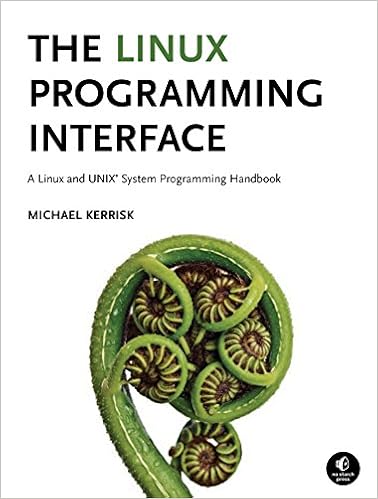
Course Overview
Course Coverage
This course covers advanced programming and machine representation of data and data structures, including dynamic structures and files. Topics include C language syntax, memory allocation, run-time data organization, function linkage and parameter passing, and the relationship between high-level and machine languages. C is the primary language of instruction with Java being a comparative language. Linux operating system and command line skills will be introduced throughout the course.
Student Learning Outcomes
By the end of the course, students will be able to:
- Apply knowledge of computing and mathematics appropriate to the discipline, including common data structures and basic algorithms, to solve problems
- Analyze a problem and identify and define the computing requirements appropriate to its solution
- Design, implement, and evaluate a computer-based system, process, component or program, including operating systems, to meet desired needs
- Function effectively on teams and use software engineering principles to accomplish a common goal
- Understand fundamentals of procedural programming with applications in electrical and computer engineering and embedded systems
- Understand hardware and software elements of data communications and computer networking
- Compare and contrast the features of the Java and C programming languages
- Manage memory allocation explicitly
- Perform low-level file access in programs
Course Schedule
Note this tentative schedule is subject to change. Please check the schedule regularly.
| Week | Starting | Topics | Reading | Notes |
|---|---|---|---|---|
| 1 | 1/13/20 | M: Course introduction and overview | C: 1 | |
| W: Basic C programming, Linux | Linux: 1.1-1.2 | |||
| F: IDE Demo & Lab 1 | ||||
| 2 | 1/20/20 | M: MLK Day, NO CLASS | C: 2 | No class on Mon (MLK Day) |
| W: Data types, operators, and printf | Linux: 2.1-2.7 | |||
| F: Console input with scanf, Compilation | ||||
| 3 | 1/27/20 | M: Conditionals: if and switch statements | C: 3 | |
| W: PE1 – Flowchart and Debugging | Linux: 6.1-6.7 | |||
| F: Lab 2 | ||||
| 4 | 2/3/20 | M: While loops and do-while loops | C: 3 | |
| W: PE2 – conditionals and while loops | ||||
| F: Lab 3 | ||||
| 5 | 2/10/20 | M: For loops | C: 4 | Project 1 posted on Mon |
| W: Functions | ||||
| F: Lab 4 | ||||
| 6 | 2/17/20 | M: Pointers and pointer arguments | C: 5.1-5.5 | Exam 1 on Friday |
| W: More on Pointers | ||||
| F: Exam 1 | ||||
| 7 | 2/24/20 | M: PE3 – functions and pointers | C: 5.6-5.12 | |
| W: One dimensional arrays | ||||
| F: 2-D arrays; arrays with functions | ||||
| 8 | 3/2/20 | M: Spring Break. NO CLASS | No class in the whole week | |
| W: Spring Break. NO CLASS | ||||
| F: Spring Break. NO CLASS | ||||
| 9 | 3/9/20 | M: Character arrays and strings | C: 6.1-6.4 | Project 1 due on Mon midnight |
| W: String functions | ||||
| F: Class Canceled | ||||
| 10 | 3/16/20 | M: Class Canceled | C: 6.5-6.7 | Project 2 posted on Mon |
| W: Lab 5 | ||||
| F: C Structures | ||||
| 11 | 3/23/20 | M: Nested structures | Tutorial | |
| W: PE4: structures | Linux: 7.1 | |||
| F: Lab 6 | ||||
| 12 | 3/30/20 | M: Dynamic memory allocation | Tutorial | |
| W: Dynamic memory allocation with structures | ||||
| F: Linked lists: add/search | ||||
| 13 | 4/6/20 | M: Linked lists: delete | Linux: 56-59 | Thursday has Monday schedule |
| W: Linked lists: ordered lists | Project 3 posted on Wed | |||
| Th: Lab 7 | Project 2 due on Wed midnight | |||
| 14 | 4/13/20 | M: Easter break – NO CLASS | All | No class on Mon (Easter break) |
| W: Zoom Q&A, password cs222 | ||||
| F: Zoom Q&A, password cs222 | ||||
| 15 | 4/20/20 | M: Lab 8 | All | Exam 2 on Fri |
| W: Exam 2 Preview | ||||
| F: Exam 2 | ||||
| 16 | 4/27/20 | M: Final review 1, Q&A | All | Project 3 due on Wed midnight |
| W: Final review 2, Q&A | ||||
| F: Q&A |
Grading Policies
Grading Weights
The final grade for this course depends upon the grades and scores earned on course components weighted as follows:
- 24%: 3 equally weighted projects – 8% for each project.
- 24%: 8 equally weighted in-class labs – 3% for each lab.
- 5% : Pop quizzes.
- 2% : Persistence. Including attendance and in-class question answering.
- 25%: 2 midterm exams - 10% for the lower grade, and 15% for the higher grade.
- 20%: Final exam.
Grades will be computed by rounding numerical percentages to the nearest integer and applying the following table:
| Letter | Range | Letter | Range | Letter | Range |
|---|---|---|---|---|---|
| A | 93-100 | B- | 80-82 | D+ | 67-69 |
| A- | 90-92 | C+ | 77-79 | D | 63-66 |
| B+ | 87-89 | C | 73-76 | D- | 60-62 |
| B | 83-86 | C- | 70-72 | F | 0-59 |
Projects
All projects are team projects in this course. For each project, all students must form teams of two (or three in the case of an odd number of students). Students are permitted to select their own teams; however, no two students may partner up for more than one project. In other words, each team will be different for each project. Students should select their teams by using the Groups tab under People, on the Canvas webpage.
Teams are responsible for dividing their workload. Except under extreme circumstances, all members of the team will receive the same grade for each project. One member of each team is designated the leader. The files for each project should be zipped up and uploaded by the team leader using Canvas before the due date. Projects must not be stored in a public folder. All project submissions must follow the provided file name requirements or risk a score of 0. If the project does not compile, the student will receive a score of 0.
Projects will be graded based on the following criteria:
- Correctness: Finding the right answer
- Formatting: Displaying the right answer according to instructions
- Style and Documentation: Producing readable code with appropriate comments
In general, projects will be graded with the diff utility. For that reason, it is imperative that project output matches sample output to the character.
Late assignment will lose points per day, including weekends and holidays. For example, -1 after 1 day, -2 after 2 days, -4 after 3 days … until 8+ days students will receive 0 score. Under no circumstances should any student disclose their code, or copy the code written by other students or from an outside source. Both students will receive 0 score on the disclosed/copied assignment.
In-class Labs
All labs are to be done in class, with the assistance of the instructor. Each assignment will be given near the beginning of a class and must be uploaded to Canvas (https://etown.instructure.com/) before the end of the class. Exercises submitted after class is over will not be accepted. To receive full credit, a programming assignment must compile, but partial credit will be awarded based on the understanding of the material demonstrated by the student’s code.
Policy Statements
Course Announcements & Discussion
All course announcements will be posted via the Canvas Announcements page – you are responsible for checking the email updates (or app notifications) from Canvas regularly.
Discussions can be made via the Canvas Discussion page – you should never post complete programs to Discussion page (only general questions are permitted).
Need to DM (direct message) me? Join my Discord Q&A server: link
Attendance Policies
Attendance is expected of every student at every lecture. Students are responsible for all content covered in class as well as assigned book chapters. Students should come to class with their text books, having read the material to be covered that day. Students who have not prepared for class may be asked to leave.
Except in the case of documented emergencies, neither exams nor in-class labs can be made up afterwards. For excused absences, students must arrange to take the exam or do the lab before the normally scheduled time. Arrangements must be made with the instructor at least two weeks prior to the scheduled time.
Students are expected to maintain an attitude of respect at all times toward their colleagues, the equipment, and the instructor. Students are expected to refrain from using the computers for non-course related purposes during class time and will be penalized 1% of the final grade for each occurrence. Cell phones and similar devices should be turned off before entering the classroom. Students who use offensive language, misuse computing facilities, or are otherwise disruptive of the classroom will be asked to leave.
Statement on School Closure
In the event that classes do not meet because Elizabethtown College is closed or delayed due to inclement weather or some other emergency, the slides that would have been covered during the missed classes will posted through Piazza group. Students are expected to do the assigned reading, review the slides, and e-mail the instructor with any questions. There will also be an opportunity to ask questions about the material when classes resume.
If a scheduled exam or lab is missed, it will normally be made up on the day that classes resume. If the College is closed on a day when a project is due, the project due date will also normally be extended until the day when classes resume. If circumstances render either of these makeup policies unreasonable, the instructor will send an e-mail explaining an alternative makeup opportunity to each student’s Elizabethtown e-mail account.
Statement on Plagiarism
Please refer to the Student Handbook for the college’s policy. All projects and assignments must be completed by students individually, without assistance from anyone other than the instructor. Students can discuss the course material with each other at a conceptual level, but each student must do his or her own work. For projects, exams, and all other activities in the course, students are expected to act according to the official policy on academic dishonesty and the highest standards of personal integrity.
The first infraction of academic honesty in this course will carry a penalty of a 0 for the project, lab, or exam in question and a reduction of a full letter grade in the final grade. If a second infraction occurs, the students involved will fail the course, and the instructor will seek the maximum penalty possible under the college’s regulations, up to and including expulsion.
Statement on Disability
Elizabethtown College welcomes otherwise qualified students with disabilities to participate in all of its courses, programs, services, and activities. If you have a documented disability and would like to request accommodations in order to access course material, activities, or requirements, please contact the Director of Disability Services, Lynne Davies, by phone (361-1227) or e-mail daviesl@etown.edu. If your documentation meets the college’s documentation guidelines, you will be given a letter from Disability Services for each of your professors. Students experiencing certain documented temporary conditions, such as post-concussive symptoms, may also qualify for temporary academic accommodations and adjustments. As early as possible in the semester, set up an appointment to meet with the instructor to discuss the academic adjustments specified in your accommodations letter as they pertain to my class.
Statement on Religious Observances
The College is eager to facilitate individual religious beliefs and practices whenever possible while retaining course student learning outcomes. It is your responsibility to meet with the class instructor in advance to request arrangements related to your religious observances that may conflict with this class, and to make appropriate plans to make up any missed work.
Software
You need an Integrated Development Environment (IDE) that contains a GCC compiler, and a machine that runs Ubuntu Linux system in this course.
There are many IDEs you can choose, e.g., Eclipse, Code::Blocks, Visual Studio, and CLion, etc, but for the purpose of in-class demonstration, I will stick with Visual Studio on Windows and Xcode on MacOS.
For Windows Users
- IDE: Visual Studio 2017 (community) and up: https://visualstudio.microsoft.com/vs/
- Ubuntu: 1) Windows and Ubuntu 16.04 (or newer) dual-boot systems; OR 2) running Ubuntu on a virtual machine (e.g. virtualbox); OR 3) Ubuntu App on Windows 10.
For MacOS X Users
- IDE: Xcode - download from App Store. Make sure you have the Xcode Command Line tools installed. http://osxdaily.com/2014/02/12/install-command-line-tools-mac-os-x/
For Linux Users
- You already have the whole world.
Note:
All the software and operating systems are available on the computers in the Esbenshade 281, Hoover 108 and Nicarry 208 computer laboratories and in the Computer Science commons area (E284).
Archived from Peilong/Peilong.github.io@d2db994 (2020-04-11).